|
|


 |
|
|
|
|
London cakes
When travelling I'm
invariably drawn to shops selling the local pastries, where the cakes on offer
are rarely labelled and so I'm usually forced to
resort to the pointing and the 'one of those please'.
So as a service to you if you've ever been confused by the cakes on sale in London
bakers and cake shops,
or if you want to come prepared, I present the largely non-book-related Fictional Cities guide to
the cakes
of my home town, and of my youth. And of course no guide to cakes
in London can ignore the tasty imports,
especially the
Polish and Portuguese pastries making inroads into our bellies and the
recent Nordic buns,
with their tendency to feature cinnamon and cardamom. Chinese Coconut buns are a
recent passion.
|
|
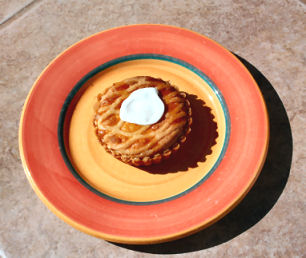
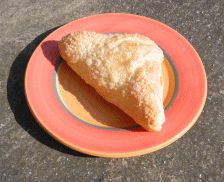
Apple Turnovers 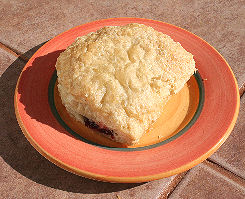 An uncontroversial cake to start with - it's a square (or circle) of sugar-laden flaky pastry folded and filled with apple, or usually some sugary apple-based gloop not unlike baby food. The only real mystery here is, or was, why there aren't turnovers containing any other fruit. I had heard rumours but not until I clapped my eyes on, and my mouth around, the raspberry turnover (pictured right) did I truly believe. An apple and blackcurrant turnover was once spotted too. And bought. And eaten. |
|
|
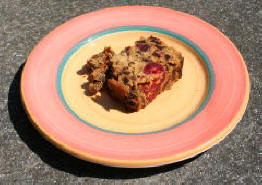
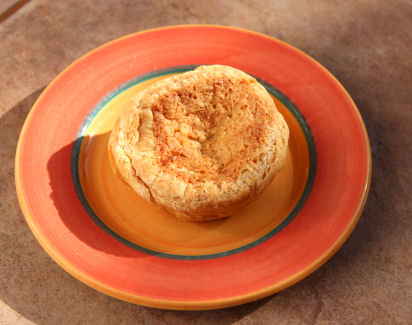
Bakewell Pudding Also known as a Bakewell Tart, although the authentic item baked only in three shops in Bakewell (photographed left) - who all claim to have the original recipe locked in their fireproof safes - has traditionally always been called a pudding. The inauthentic versions, always called tarts and often baked by Mr Kipling, have an icing top, a glacé cherry, and a more evident layer of jam. The original relies on it's stout almond paste filling and is made from flaky pastry.
|
|
Bath Buns A bun which you usually eat in the bath. No, seriously, the bath bun was invented, so the story goes, by Dr W. Oliver, an 18th century physician who treated visitors to the famous Bath Spa. His bun proved so popular, and his patients grew so fat, that he had to invent a plain biscuit for his patients to eat instead- hence the Bath Oliver biscuit. The chunks of sugar sprinkled on the top of this otherwise rather plain bun were originally sugar-coated caraway seeds. |
|
|
|
Battenberg
(aka
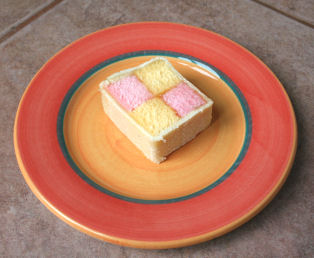
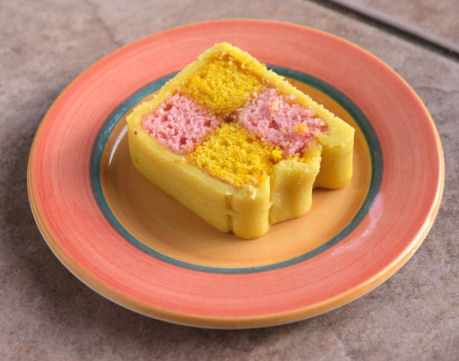
Battenburg) Bought in a brick and sliced, like fruit cake, the Battenberg is a cake for the almond fan, its icing surround being more than a little marzipanish and, as with the frangipan tart, there's apricot jam too. It's famous for the pink and yellow check pattern of its sponge cake, which would be less desirable in, say, a shirt. (The large checker-board patterns on emergency vehicles in the UK are called Battenberg markings.) It is said to have been first made to honour the marriage of one of Queen Victoria's granddaughters to Prince Louis of Battenberg in 1884, with each of the four squares representing one of the Battenberg princes. The upper photograph is of a slice of supermarket Battenberg, the lower is of a slice of a more artisanal offering. I had longed to find such a thing for many years, having seen one once in Selfridges and failed to purchase it. That my first such slice was only tasted in my 63rd year shows how all good things finally come to he who waits. It was acquired online during the 2021 winter lockdown (see left), and then on a visit to Fortnum's in April 2021, on the occasion of the post-lockdown opening of non-essential shops and libraries, I bought the Battenberg below. 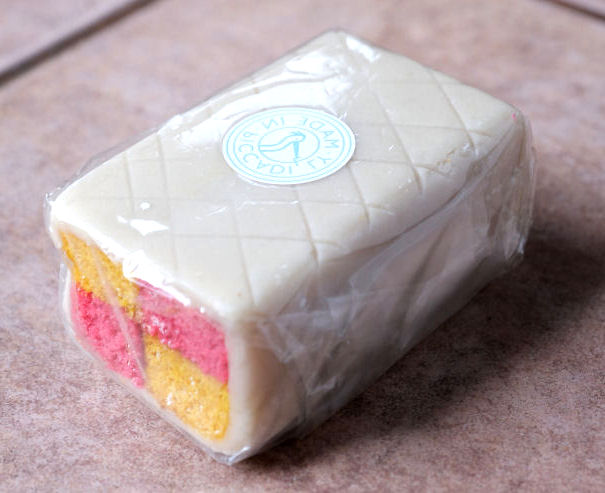 But, call me shallow, neither was a patch on the taste of traditional supermarket battenbergs. I seem to prefer them a little bland. For entertainment there's Pimp your battenberg. |
|
|
Belgian Buns |
|
|
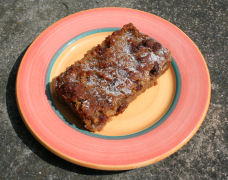
Bread Pudding A slab of dense, moist and spicy sponge, tasting a bit like booze-free Christmas pudding. This one's traditionally eaten hot with custard and is made from stale bread, as is... |
|
|
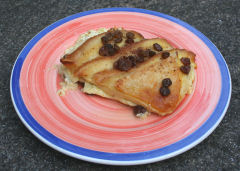
Bread 'n' Butter Pudding ...but this one also has the appearance and texture of having been made from slices of bread, soaked in milk, with sugar, raisins and spices (cinnamon and/or nutmeg). It is also eaten hot and, being pretty squidgy, is eaten with a fork and so is really more of a pudding than a cake. In times past it was a way for poor people to use up leftover stale bread. Now we have more money and buy bread 'n' butter pudding ready-made from supermarkets, with added cream. NB: The B'n'B pudding was photographed on a larger plate. |
|
|
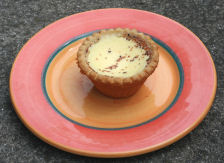
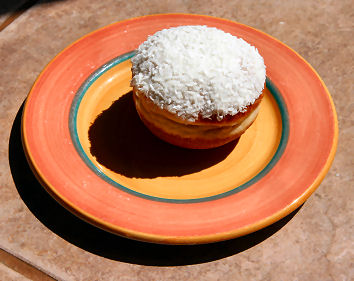
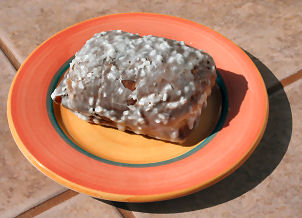
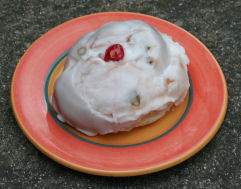
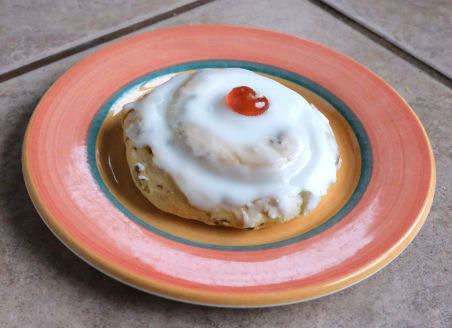
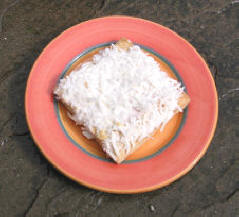
Cheese Cakes Not to be confused with cheese cake - these are sometimes called London Cheese Cakes to reduce confusion. They have a base of flaky pastry topped with icing that's full of coconut shreds. (Does anyone else remember coconut tobacco? Similar stuff but made brown with chocolate powder.) I have a memory of jam filling too, and you'll sometimes still detect a central faint jammy smear. It's a cake that can be flaky and crumbly or soft and chewy, possibly dependent on freshness. I prefer the latter. As recent generations of Londoners have moved to Essex, so has the London Cheesecake. Mixing in frangipan with a jam filling seems to have become a thing too, which makes something like a coconut-topped bakewell tart. Confusing, but delicious. But why is it called a cheese cake? A very good question. One theory is that the shredded coconut looks like grated cheese. No, I'm not convinced either. |
|
|
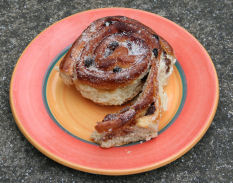
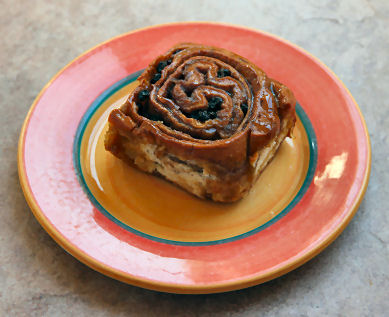
Chelsea Buns |
|
|
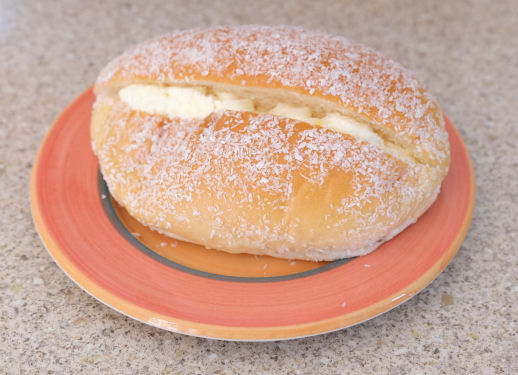
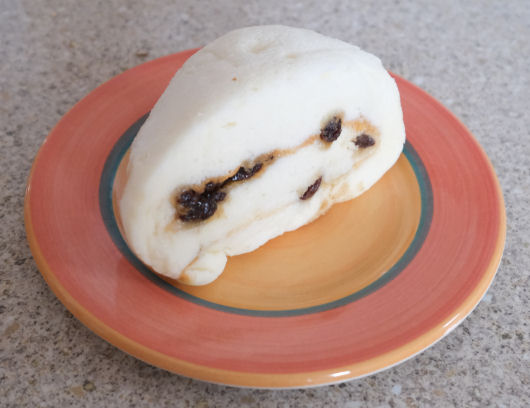
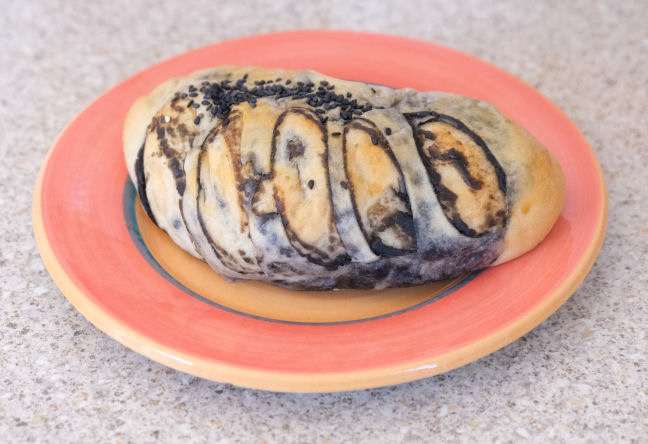
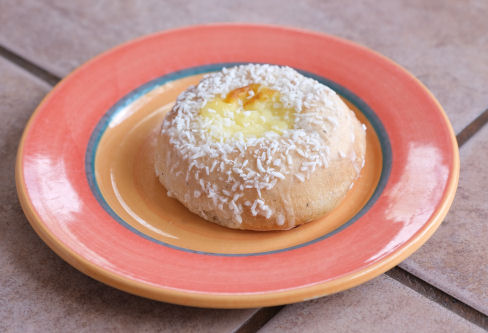
Chinese Buns Coconut 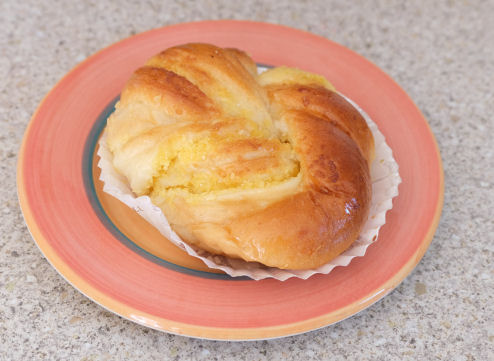 As a big fan of coconut it's a constant disappointment to me that the only native cake with considerable coconut content is the London Cheese Cake. So praise be Chinese bakeries, in which one can always find at least one type of coconut cake, sometimes four or five. I've found three so far in the one shop in Chinatown, including the big and fluffy Coconut Cream Bun (left) and the even nicer chewy Coconut Bun (right). Raisin Looking like an undercooked pillow of bread-and-butter pudding this one was odd, and eating-wise it was...unusual. Poppy seed Poland does famous poppy-seed cakes, I found a poppy-seed slice in Paris once, and a poppy-seed stollen in Germany. I've also had poppy-seed ice cream in Italy and Germany. And now this, and yet there is no native Brit cake I know that uses them. Odd. |
|
|
Chorley Cakes Another place-named cake, like the Eccles cake below, and like the Eccles cake this is chock-full of raisins. The only difference is in the pastry, which is less flaky and more biscuit-y with this one. A flatter and less airy eating experience results. |
|
|
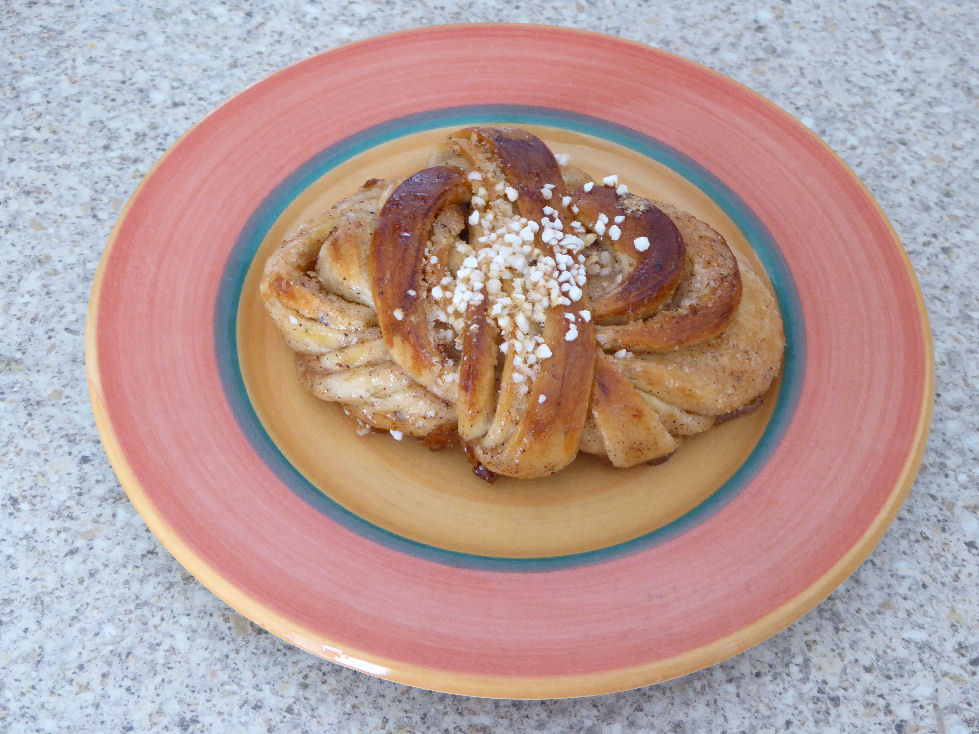
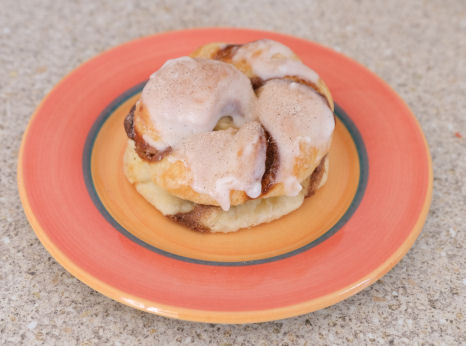
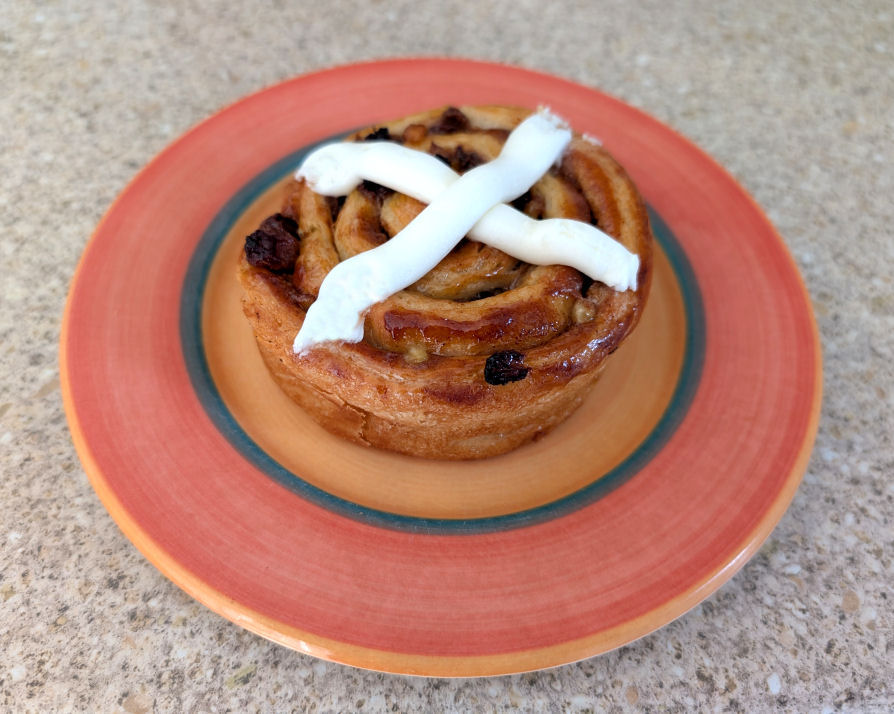
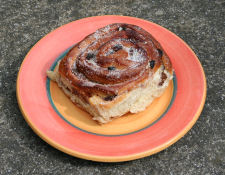
Cinnamon Buns The twenty-teens have seen the appearance in London of sundry bakeries which might generically be termed Nordic, and one of the first was called The Nordic Bakery, funnily enough. What these places share is a tendency to produce cinnamon buns. Said buns are mostly delicious, but vary considerably, mostly in density. The heaviest was the one from the aforementioned Nordic Bakery in Golden Square near Piccadilly Circus. A lighter one was produced by Bageriet, in the alley down the side of where Stanfords used to be in Covent Garden. Recently worth a mention have been buns from Fabrique (see photo left), Scandikitchen near Oxford Circus and Bread Ahead in Borough Market. The latter is my current (February 2025) favourite. And there's even a cinnamon bun day in Sweden, called Kanelbullens dag, every October 4th. 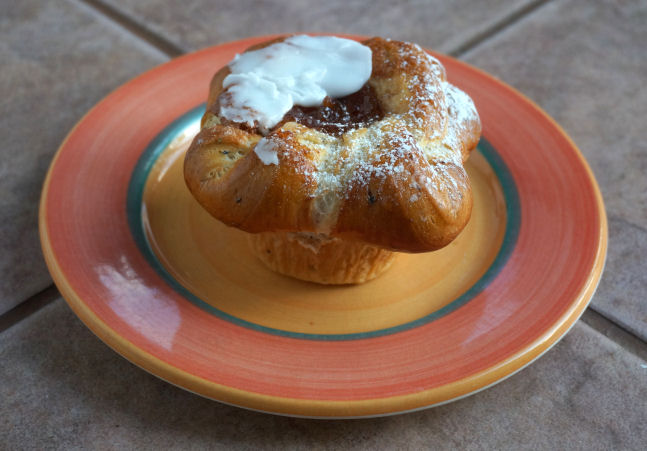 Bageriat also do a cinnamon and apple bun (see photo right) which was a recent faves, and which might be topped by berries or rhubarb instead, depending on the season. |
|
|
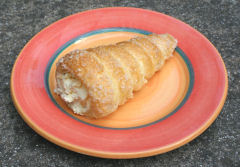
Cream Horns When I were a lad these were full of sweet imitation cream, but now they seem to be found only in supermarket fridges full of fresh cream and jam. The problem of which end you start with remains - I go for the non-pointy end myself, to discourage leakage. |
|
|
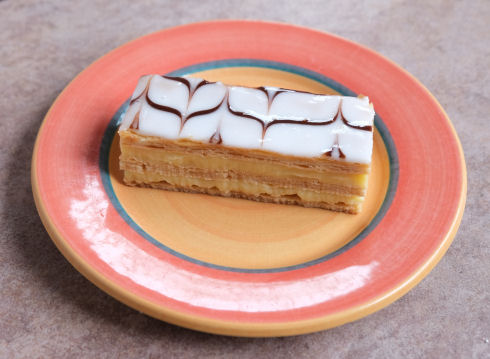
Cream Slice This one is another naming minefield. A cream slice is what it was always called in our house, it's also known as a vanilla slice or a custard slice, but it's now more likely to be pretentiously labelled a Mille-feuille, even in Sainsbury's. It consists of layers of puff pastry with a filling of custardy crème pâtissière. It has icing on top, with brown oscilloscope patterning not unlike that found on some shop-bought bakewell tarts. |
|
|
Custard Tarts A deep tart, full of custard, but cool and wobbly set custard, not hot and runny custard, and flavoured with nutmeg. Supposedly first baked in East Anglia, with a history dating back to the medieval period. When I was young you could buy them in Hoxton from baker's shop windows, now they are mostly found in boxes in supermarket fridges. They have been fashionably superseded by the Portuguese Custard Tart. |
|
|
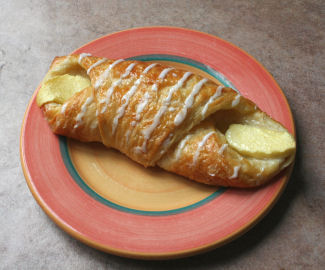
Danish Pastries OK, we'll take my thing about place-named cakes as read here. I'm hoping that some kind soul in Denmark might be able to help me out. Danish pastries as they're known in the UK are united by having a moist and chewy and quite heavy pastry. Beyond that there are several varieties and shapes. The simplest is the Fruit Danish, which is just a swirl of pastry with raisins. The Custard Danish, The Apricot Danish and the Apple Danish introduce us to different shapes, though. These flavours take the classic shape of the square of pastry with two opposite corners meeting. Sometimes they take the apple-turnover form. An example of the creeping Frankenstein-cake phenomenon, usually to be condemned, came in 2025, courtesy of Waitrose - the Hot Cross Bun Danish. But lo it was a treat. Update - August 2008 Some clarity at last. Barbara from Michael's Cycles in Worthing has a Danish mother-in-law who writes thusly: The Danes don’t really have a word covering all of their range of Danish Pastries, tending to call each one by its particular name, and then they have a different type of pastry for times of the day, but generically they talk in terms of Wienerbrød. It really refers to the kringler, the big horseshoe shaped one that you have for breakfast. The name comes from the time when Danish bakers went to Vienna (Wien) in the Napoleonic wars and brought back what they had learned whilst there. Barbara also informs me that the custard ones are known in Denmark as 'Pus in the Baker's Eye'. Lovely. But then clarity descends into controversy! Richard in California finds a source that claims that some Austrian bakers who were hired to replace Danish bakers during a strike passed on their method (of rolling butter between the layers of puff pastry then letting it rest before shaping and baking) which the Danish bakers then spread around the World. So it's either a pastry technique that Danish bakers brought back from Austria or one that the Austrian bakers themselves took to Denmark. |
|
|
Praise be to Greggs for giving us the Coconut Snowball Doughnut in 2011. It had a coconut creme filling too. It was one of a range of new doughnut creations, which also included the Jaffa Cake doughnut and the Slime doughnut, the latter featured unnervingly coloured lime-flavoured icing. All are now mere fond and/or disgusting memories. |
|
|
Eccles Cakes |
|
|
Frangipan
tarts |
|
|
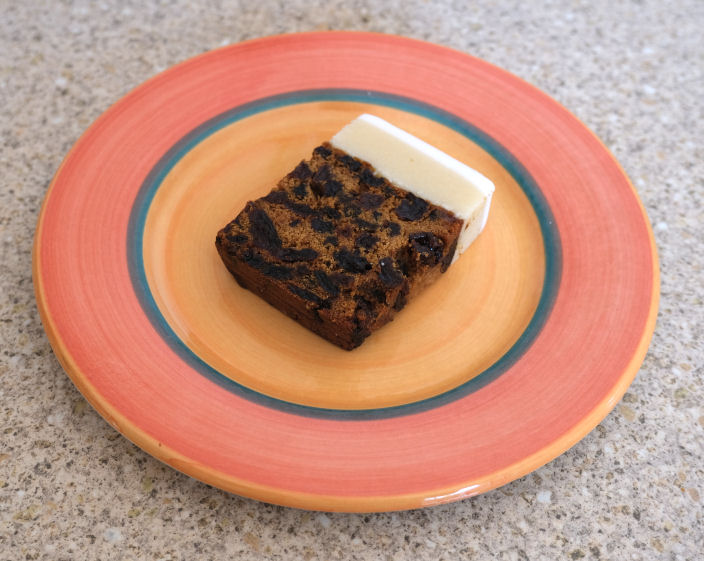
Fruit Cake 'Fruit' here means dried fruit, currents and raisins (and often cherries) similarly to the 'Fruit Danish' which signifies circularness and the presence of raisins. Fruit cake is mostly sold in brick-like slabs, or made domestically in the traditional round cake shape, but it is also available in individual slices, often from railway buffet carts. In its larger incarnations It also often comes in a paler circular form with a sugary top, where its name then acquires one or more of the words country, house, traditional and manor. But the naming of fruitcake is a bit of a free-for-all, truth be told. My current favourite, due to its marzipan-to-icing ratio tending towards the former, is called the Strathspay by Walkers (see photo below left) who make many Scottish-named variations And, again - you'll have seen this coming by now - does the name "Cherry Genoa" have anything to do with Genoa the place? At Christmas fruit cake traditionally comes with a layer of marzipan, a layer of icing and, in our house, two small penguins. Ornamental, not real. |
|
|
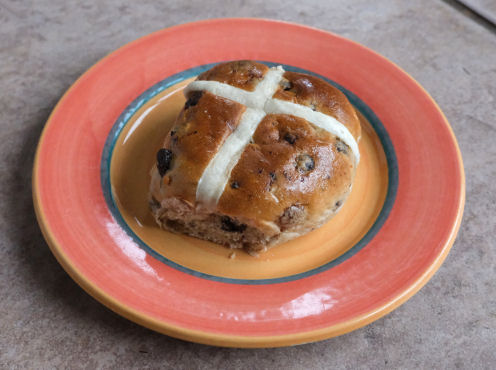
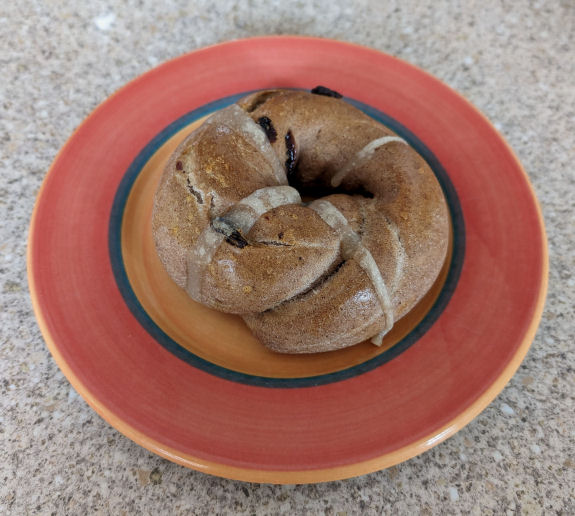
Hot Cross Buns
UK supermarkets have been indulging
in lily-gilding too in recent years with many new versions of this old
favourite. Varieties include Extra Spicy, Luxury (which usually just means more
raisins), Apple & Cinnamon, Date and Cranberry, Cheese, Cinnamon &
Raisin, Sticky Toffee and (brace yourself) Belgian Chocolate versions.
Amongst the mutant incarnations that Waitrose have given us are Cherry
Bakewell, Earl Gray and Mandarin, and Simnel Cake. And then in 2021 I
spotted...Marmite flavour! |
|
|
|
|
|
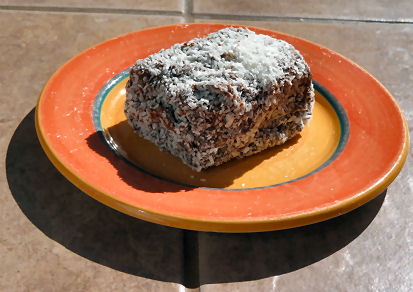
Lamingtons About as far from a London cake as is possible - this one hails from Australia. A slab of sponge with a layer of strawberry jam in the middle is covered in chocolatey stuff and coated in desiccated coconut. Not what you'd call sophisticated, but a treat not to be passed up, especially as they are not often found for sale over here. They are common in South Africa too, it seems, and New Zealand, where a raspberry version is popular. Lemon Lamingtons being another permutation. There's controversy over the origins of the cake, but mostly there's agreement that it was named after Lord Lamington, who was Governor of Queensland from 1896 to 1901. The man himself was less than keen, referring to them as "those bloody poofy woolly biscuits", presumably whilst spluttering and/or blustering and fiddling with his copious moustache. |
|
|
|
|
|
Marlborough buns A new one on me. A bit like a rock cake but with some glazing going on, sugar bits, currents, and a citrus thing, I think. Nice, and not needing buttering. My not having heard of them before may be because they seem to be a recent invention of Marks & Spencer and/or Waitrose, which look to be the only sources. |
|
|
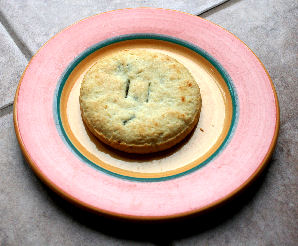
Mince pies A Christmas confection, being a small pie filled with mince meat, which does not now contain meat, but did back then. (The word sweetmeat similarly denotes a small item of confectionary containing no parts of dead animals.) Mince meat here denotes a spicy dried-fruit filling, featuring cloves, cinnamon and nutmeg, now also used to flavour all sorts of spin-off products, like tea, coffee, chocolate, biscuits, fudge, etc. The only animal product possibly to be found in mince pies now is suet, and even that is now almost always vegetarian suet. Recent years have also seen the rise of novelty flavour mash-ups, such as frangipan, almond, coconut, pineapple, prosecco and cherry, but these rarely result in an improvement. The puff-pastry mince pie takes us confusingly into the realm of the Eccles Cake. Historically the pie is supposed to date from the post-Crusades adoption of recipes that mixed meat, fruit and spices, brought from the Middle East. I have also read that in Tudor England mince pies (then called shrid pies and large and oblong in shape) were made from 13 ingredients to represent Jesus and the 12 apostles (like the marzipan balls on a Simnel Cake) with mutton sometimes added to represent the shepherds. |
|
|
|
|
|
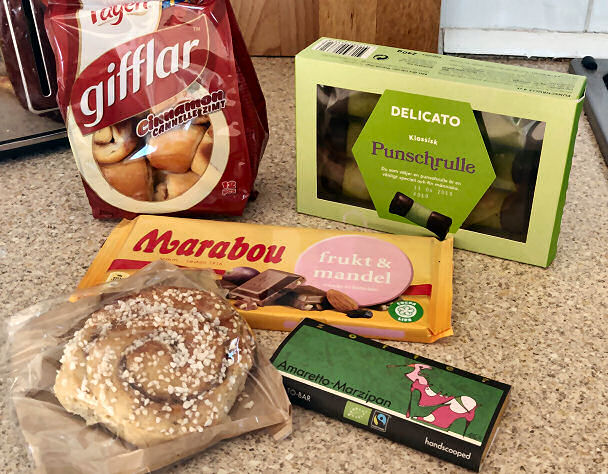
Nordic cakes The twenty-teens saw the appearance in London of sundry bakeries which might generically be termed Nordic and have increased the number and quality of cinnamon buns available here. They have their own entry above, but they are not the whole story, as the delights below illustrate. 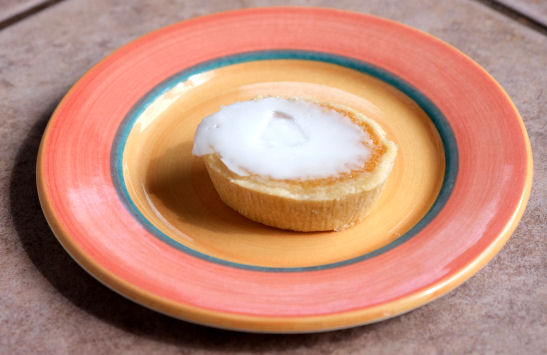 Mazarin MazarinAn almond tart very similar to a Bakewell tart. But oval rather than circular, and missing the cherry. Said to be named after the Italian-born 17th-century French cardinal and diplomat Jules Mazarin. Maybe he brought the crostata di mandorle recipe with him from Italy? Diplomatic ties between France and Sweden were strong at the time. The plastic film in the boxsimilar to the Punschrulle one (left) always flattens the icing. Punschrulle (aka vacuum cleaners) That's a green box of them in the Scandikitchen still life photo to the left. It's another leftover-based pastry, being supposedly first made from swept-up biscuit crumbs. Their covering is green marzipan, the ends are dipped in chocolate, and they're flavoured with punsch liqueur. 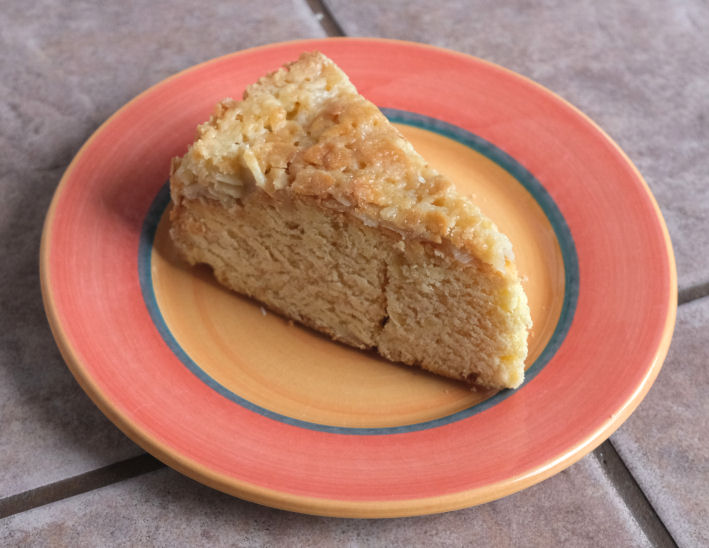 Tosca cake (toscakaka) An apple (usually) cake with an almond topping. The tosca naming can also be applied to an apple bun with an almond topping, as do The Nordic Bakery (see left), with very yummy results. The cake itself, at least the slice from The Nordic Bakery, was disappointingly dry and apple-free. As to why the cake and bun are so named - your guess is as good... One (daft) theory is that it derives from Puccini's opera, another is that the influence of almond cakes from Tuscany is involved.
|
|
|
|
|
|
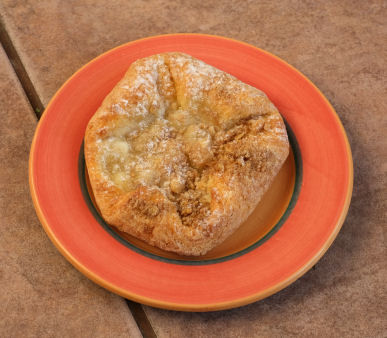
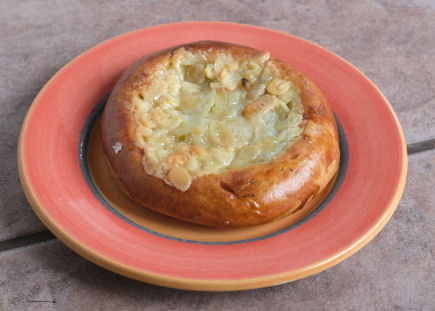
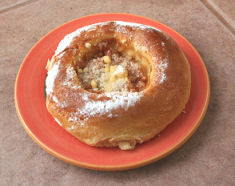
Drozdzowka Polish apple and cinnamon thing I did the traditional 'what's that?' point and ask thing. And what it is is large and made of a bun-type pastry. It has a big dent full of chunky real-apple filling, and it's not light on the cinnamon. |
|
|
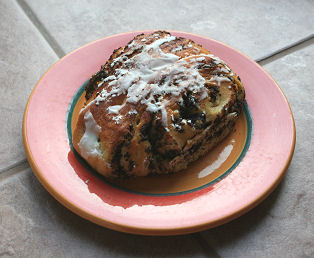
Poppy seed cake Can be (and is more usually) bought as a big slab that you slice up, but also comes as individual cakes. Redolent of the Danish in shape, but more bunlike and light in consistency, and chock full of poppy seeds, as you'd expect. The taste is unexpected, though, being more full of flavour than the ingredients might suggest. Maybe something else is going on here. Also said by the woman in my local Polish deli to be traditionally more of a Christmas thing. |
|
|
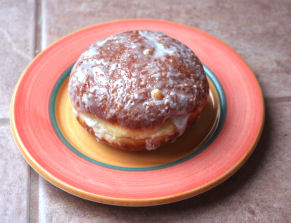
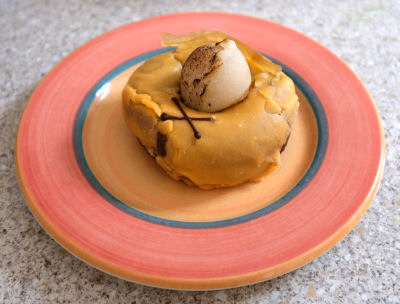
Cocodoughnut A darkish and squarish doughnut with coconut-flecked icing and a custardy filling. The sweetness of the icing tends to overwhelm the coconut bits a bit, and the added zing of the filling makes for a decidedly unsubtle cake, but not an unpleasant one |
|
|
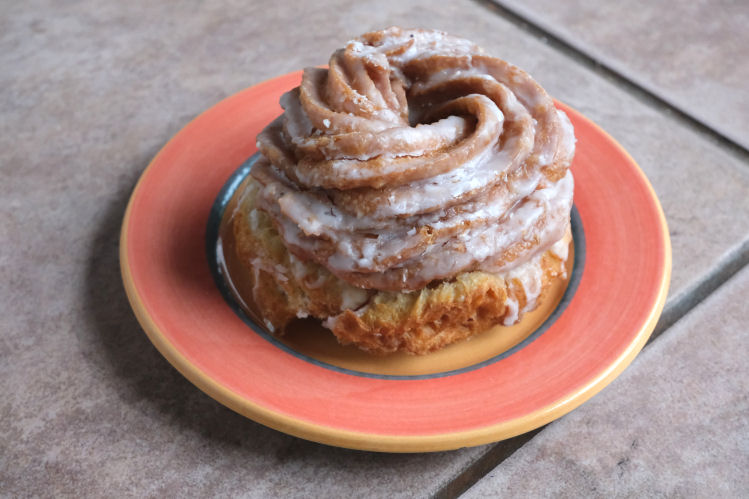
Swirly/churro/doughnut thing In January 2021 a new polish bakery opened in Tooting, offering a range of strange cakes to try. I didn't take to this one. A big cake like a swirl of churros, so a bit hollow inside. It was sold to me as plain and not-too-sweet but I found it just a boring sugar-fest. And with a bit too much of a smell of frying about it, so a suspicion of lard lingered. I will find out what it's actually called though. |
|
|
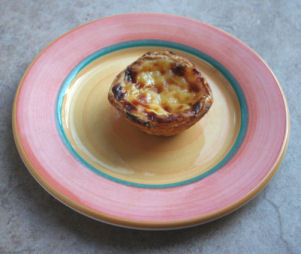
Portuguese Custard Tarts Pretty similar to the native version, except smaller and with a pastry base that's best described as stout and chewy flaky pastry. They're also quite a bit sweeter with that caramelised topping replacing the nutmeg. So not really that similar at all. Known in Portugal as pastéis de nata they were first created by Catholic nuns at the Jerónimos Monastery in an area of Lisbon called Belém. The Casa Pastéis de Belém bought the 'secret' recipe and continued making them when the convent closed in 1820, and then they were renamed Pastéis de Belém. This authentic version is sprinkled with cinnamon and powdered sugar, it is said. 2019 saw the opening in London of a small chain of specialist Portuguese custard tart bakers called Cafe de Nata who also do them flavoured. Amongst these are apple & cinnamon and coconut flavours which means that they are guaranteed my regular custom. |
|
|
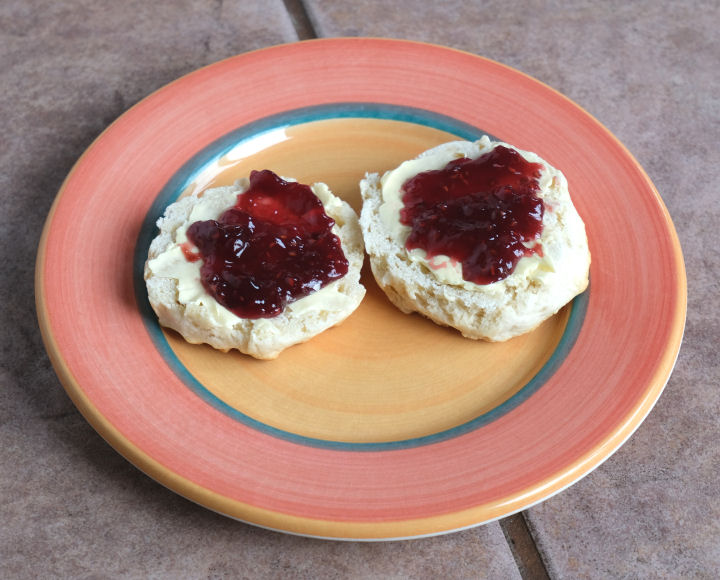
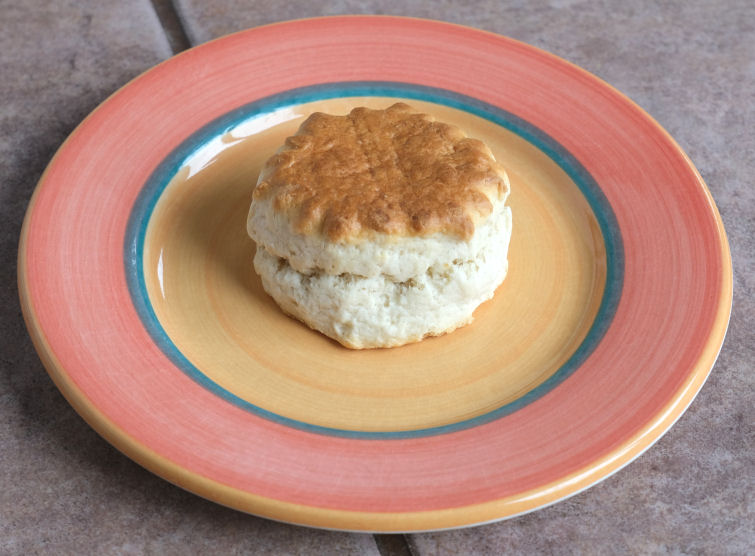 Scones SconesA cake that's also a double can of worms. The first controversy is pronunciation - does it rhyme with gone, or stone? There's also an argument as to whether, when eaten with jam and cream, as scones mostly are, and are thereby known as a cream tea, the cream or the jam is put on top. Class and geography come into play here on both counts, with the Devon/Cornwall disagreement about what goes on last a famous one. |
|
|
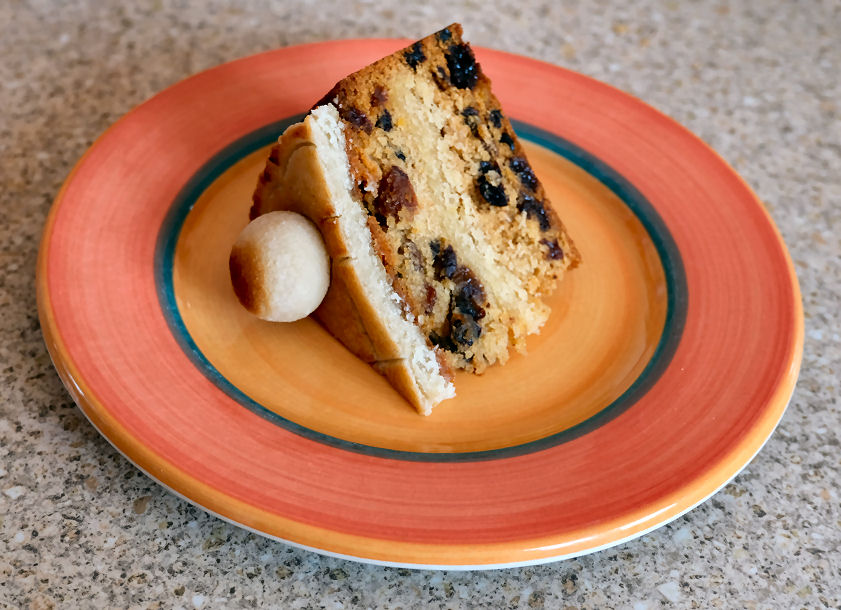
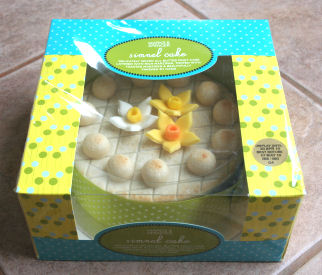
Simnel Cake An Easter cake that's only in the shops around Easter time, unlike the hot cross bun. There is confusion as to whether the cake is named after Lambert Simnel, a fraudulent pretender to the throne of Henry VII who failed in an overthrow attempt but was pardoned and allowed to work in the King's bakery, or from a Roman bread called Siminellus. There is also talk of a cake-making argument between a couple called Simon and Nelly, but this sounds far too twee for my liking, or believing. It is said to have traditionally been a cake cooked by poor girls working as servants, to be given to their mothers on Mothering Sunday, for which servants and apprentices got time off to go and visit, providing they weren't gone longer than five days. Back then the cake was thinner and harder and so more akin to a biscuit, it is said. I'le to thee a Simnel bring 'Gainst thou go'st a mothering So that, when she blesseth thee, Half that blessing thou'lt give me Robert Herrick (1591-1674) To Dianeme Now it's a light, quite spicy, fruitcake with a soft marzipan layer in the middle. It's topped with marzipan and has eleven marzipan balls on top which symbolise the apostles, minus Judas. (Those with twelve balls are said to have an added ball for Jesus.) The more perceptive amongst you might be getting the impression that this is a cake for marzipan lovers. Spot on! 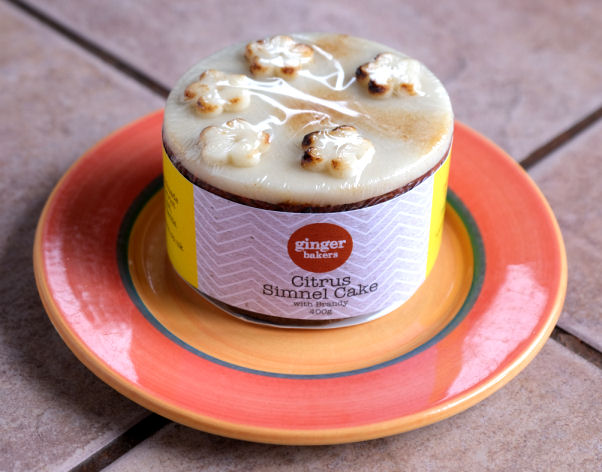 In March 2021 I became aware that the world had been blessed with a novelty simnel cake. Not as cringe-inducing as some of the abomination-flavours that the hot cross bun has suffered in recent years, in fact a tempting development, which turned out to be, well, yummy. This was the small Citrus Simnel Cake, pictured right. It is made by a company called The Ginger Bakers, and the only negative here is how long it took me to spot the pun in their name. For Easter 2025 Crosstown Doughnuts gave us the Simnel Cake Doughnut (see left). The first mouthful was unnerving - the body of the cake being oddly sponge-like. But it grew on me, being fruit-cakey in flavour. It was a bit too sweet, although this was ameliorated with bites of the bitter marzipan apostle on the top. |
|
|
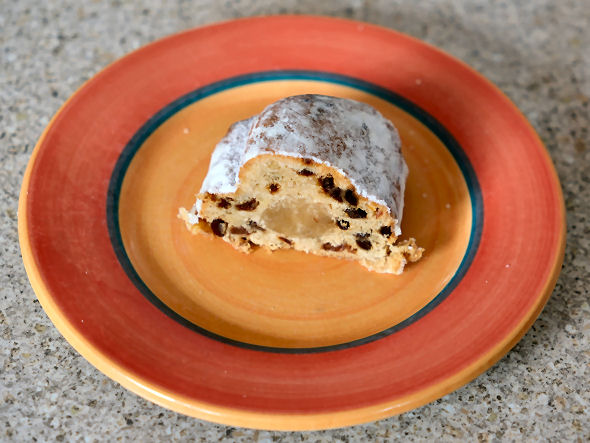
Stollen Following neatly alphabetically after the round English Easter cake with a marzipan centre and topping, comes the log-shaped German Christmas cake with a marzipan centre. Originating in Dresden it's known in Germany as Christstollen. It is said to symbolise the body of the baby Jesus wrapped in swaddling. Or icing sugar in this case. But it's also said that it was originally of Jewish origin, and eaten throughout the Hanukkah season. A Dresden court baker called Drasdo probably created the first fruity stollen around 1429. Online you'll find the suggestion that you might like to warm it up in the microwave or a toaster. I haven't tried this yet. Like Simnel Cake this is almost only available in its season. I got one on a trip to Dresden in August 2024, but, searching online later, found another Dresden baker that only takes orders from October. |
|
|
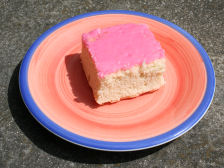
Tottenham Cake |
All cakes photographed by me and guaranteed eaten within
mere minutes of the photograph being
taken.
No waste here.
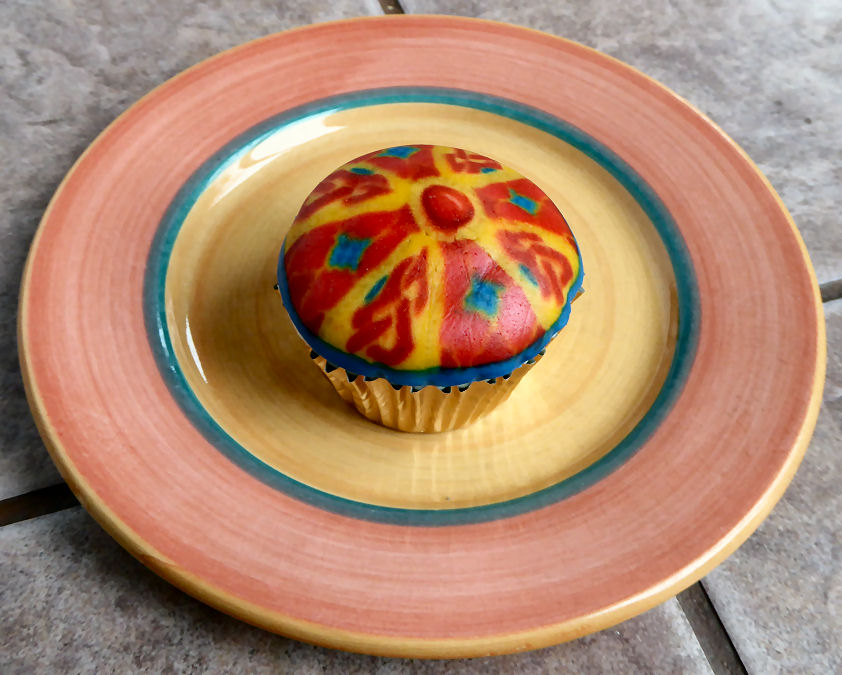
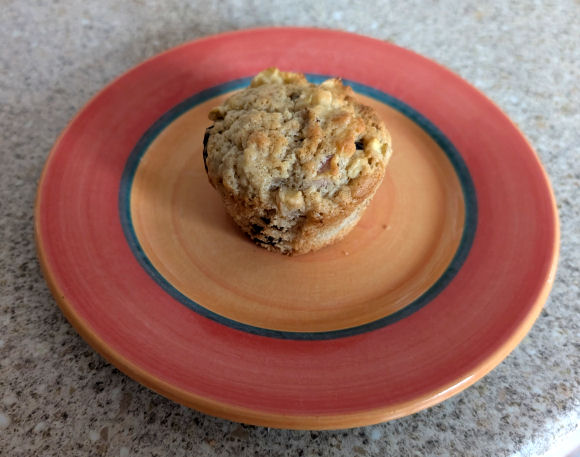
And you can't get more English than a gluten-free Anglo-Saxon
cupcake!
A Barmycakes
confection, but they are history now too.

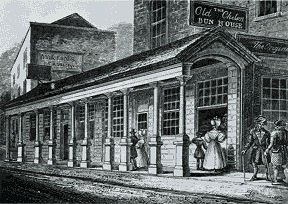 John Timbs in his Curiosities of London
- as quoted on Mick
Jackson's excellent
John Timbs in his Curiosities of London
- as quoted on Mick
Jackson's excellent